How to Become a Quality Manager: Skills, Training & Career Path
16 March 2026
How to become a quality manager is a question that thousands of professionals ask each year as they look for a career that combines leadership, problem-solving, and real operational impact. Quality managers are responsible for ensuring that an organization’s products and services consistently meet customer expectations, regulatory requirements, and internal standards. It is a role that exists in virtually every industry, from manufacturing and healthcare to technology and professional services.
The path to becoming a quality manager is not a single straight line. Some professionals grow into the role from the shop floor, others transition from engineering or operations, and some enter through formal quality management education. What they all share is a strong understanding of quality management systems, especially ISO 9001, and the ability to lead teams toward continuous improvement.
At 9001Simplified, we provide ISO 9001 online training that helps quality professionals at every stage of their career build the knowledge and credentials they need to advance.

What Does a Quality Manager Do?
A quality manager oversees an organization’s quality management system and ensures that products, services, and processes meet defined standards. The scope of the role varies by industry and company size, but typically includes the following responsibilities:
Developing and maintaining the quality management system (QMS)
Planning and conducting internal audits
Managing corrective and preventive action processes
Analyzing quality data, trends, and performance metrics
Leading management review meetings
Training employees on quality procedures and standards
Coordinating external certification audits
Managing supplier quality and evaluation programs
Ensuring compliance with regulatory and customer requirements
Driving continuous improvement initiatives across the organization
In smaller companies, the quality manager often handles all of these responsibilities directly. In larger organizations, they may lead a team of quality engineers, inspectors, and coordinators.
Quality Manager vs Quality Assurance Manager vs Quality Control Manager
These titles are often used interchangeably, but there are important differences.
A quality manager typically has the broadest scope. They oversee the entire quality management system, including both assurance and control functions, and they are responsible for the strategic direction of quality within the organization.
A quality assurance (QA) manager focuses on the systems and processes that prevent defects. QA is proactive – it ensures that processes are designed and followed correctly so that problems do not occur in the first place.
A quality control (QC) manager focuses on inspecting and testing products to identify defects after they are produced. QC is reactive – it catches problems that have already occurred.
In practice, many organizations combine these roles, especially in small to midsize companies. Regardless of the title, the underlying skill set revolves around understanding quality management principles, process control, auditing, and continuous improvement.
Skills Required to Become a Quality Manager
Quality management is a profession that requires a blend of technical knowledge, analytical ability, and leadership skills. Below are the most important skills that employers and hiring managers look for.
Quality Management System Knowledge
Understanding ISO 9001 is the single most important technical skill for a quality manager. ISO 9001 is the foundation of quality management across industries, and the vast majority of certified organizations use it as the basis for their QMS. A quality manager must understand the standard’s requirements, how to implement them, and how to maintain and improve the system over time.
Internal Auditing Skills
Quality managers are responsible for planning, conducting, or overseeing internal audits. This requires understanding audit planning, evidence collection, finding classification, and reporting. Many companies expect their quality managers to hold an internal auditor or lead auditor certification.
Root Cause Analysis and Problem-Solving
When quality problems occur, the quality manager leads the investigation. Skills in root cause analysis methods such as 5 Whys, Fishbone (Ishikawa) diagrams, and failure mode analysis are essential for identifying why problems happen and implementing effective corrective actions.
Data Analysis and Metrics
Quality managers work with data constantly – defect rates, customer complaint trends, audit findings, process capability, and KPI dashboards. The ability to collect, analyze, and present quality data to support decision-making is critical.
Communication and Leadership
A quality manager must be able to communicate effectively with everyone from shop floor operators to the executive team. They need to explain complex requirements in simple terms, lead training sessions, present audit results to management, and influence people across departments to follow quality procedures.
Regulatory and Industry Knowledge
Depending on the industry, quality managers may need to understand specific regulations beyond ISO 9001. In manufacturing, this might include IATF 16949 or AS9100. In healthcare, it could be ISO 13485 or FDA requirements. In food production, HACCP or ISO 22000. Understanding how ISO 9001 relates to these industry standards is valuable and opens up more career opportunities.
Education and Background
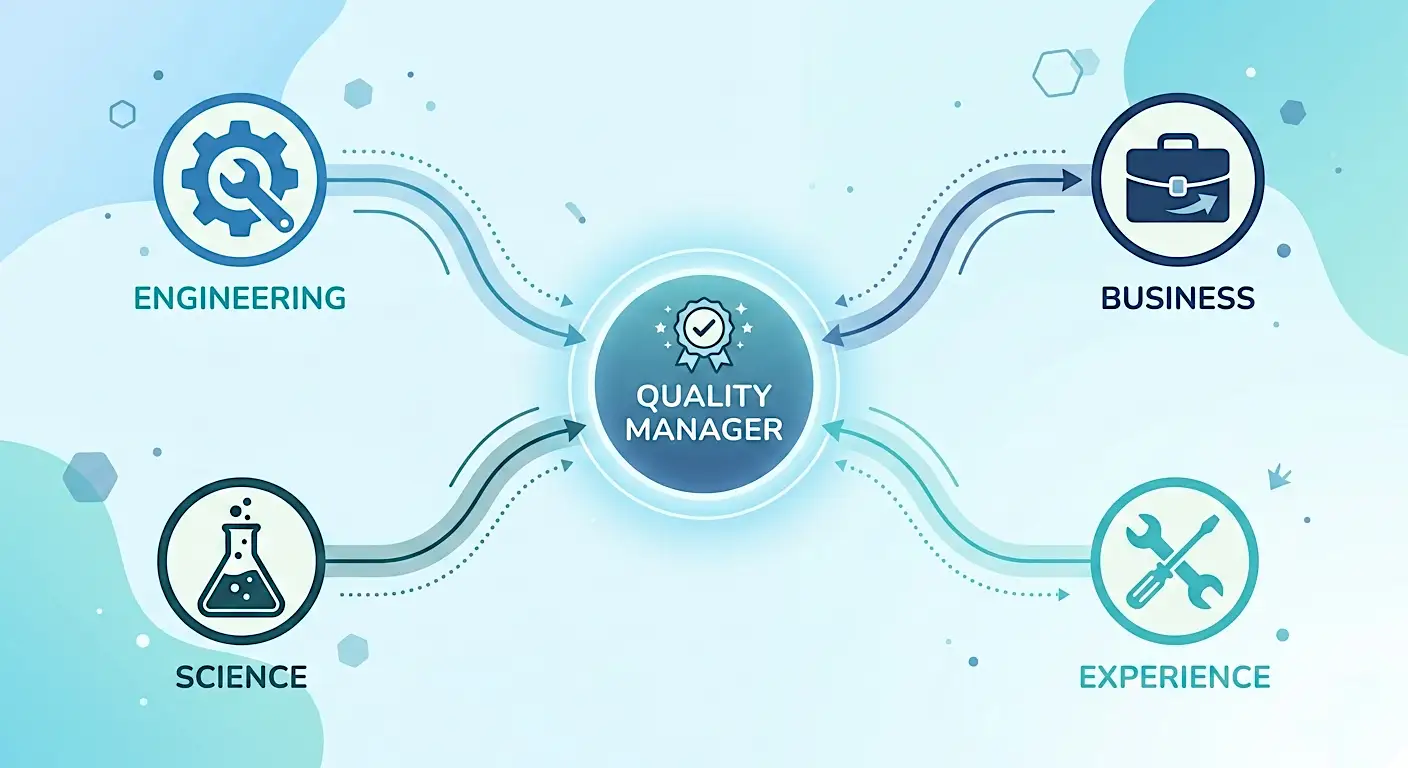
There is no single degree required to become a quality manager. Professionals in this role come from a variety of educational backgrounds. The most common educational paths include:
Engineering (industrial, mechanical, manufacturing, or quality engineering) – The most traditional path, especially in manufacturing environments.
Business management or operations – Common in service industries and companies where the QMS is closely tied to operational performance.
Science or technical disciplines – Frequently seen in pharmaceutical, food, and healthcare quality management roles.
No specific degree – Some experienced professionals work their way into quality management from the production floor, maintenance, or customer service through demonstrated competence and relevant certifications.
While a bachelor’s degree is commonly preferred by employers, practical experience combined with professional certifications (discussed below) can be equally or more valuable, especially in small to midsize companies.
Professional Certifications That Accelerate Your Career
Professional certifications are one of the fastest ways to demonstrate quality management competence and stand out to employers. The most impactful certifications for aspiring quality managers include:
ISO 9001 Lead Auditor Certification
This is the gold standard credential for quality professionals. A lead auditor certification demonstrates that you have the skills to plan and conduct ISO 9001 audits independently. It is recognized globally and valued by employers across every industry.
At 9001Simplified, our ISO 9001 Lead Auditor Certification Training prepares you to pass the certification exam and apply auditing skills in real-world situations.
ISO 9001 Auditor Certification
For professionals who want to start with a foundational auditing credential before pursuing the lead auditor level, the ISO 9001 Auditor Certification Training provides a strong entry point.
ISO 9001 Implementer Certification
This certification is designed for professionals responsible for building and implementing a quality management system. If your goal is to lead an ISO 9001 implementation project, the ISO 9001 Implementer Certification Training provides the structured knowledge to do it effectively.
Exemplar Global (TPECS) Certification
Exemplar Global offers internationally recognized personnel certification under the TPECS scheme. It validates competence in auditing, quality management, and related disciplines. For more information, see our guide on Exemplar Global TPECS Certification.
ASQ Certifications (CQM, CQA, CQE)
The American Society for Quality (ASQ) offers certifications such as the Certified Quality Manager (CQM), Certified Quality Auditor (CQA), and Certified Quality Engineer (CQE). These are well-recognized in North America and valued by many employers, especially in manufacturing and engineering environments.
The most direct path for someone targeting a quality manager role is to start with ISO 9001 training and auditor certification, and then add ASQ or Exemplar Global credentials as your career progresses.
Typical Career Path to Quality Manager
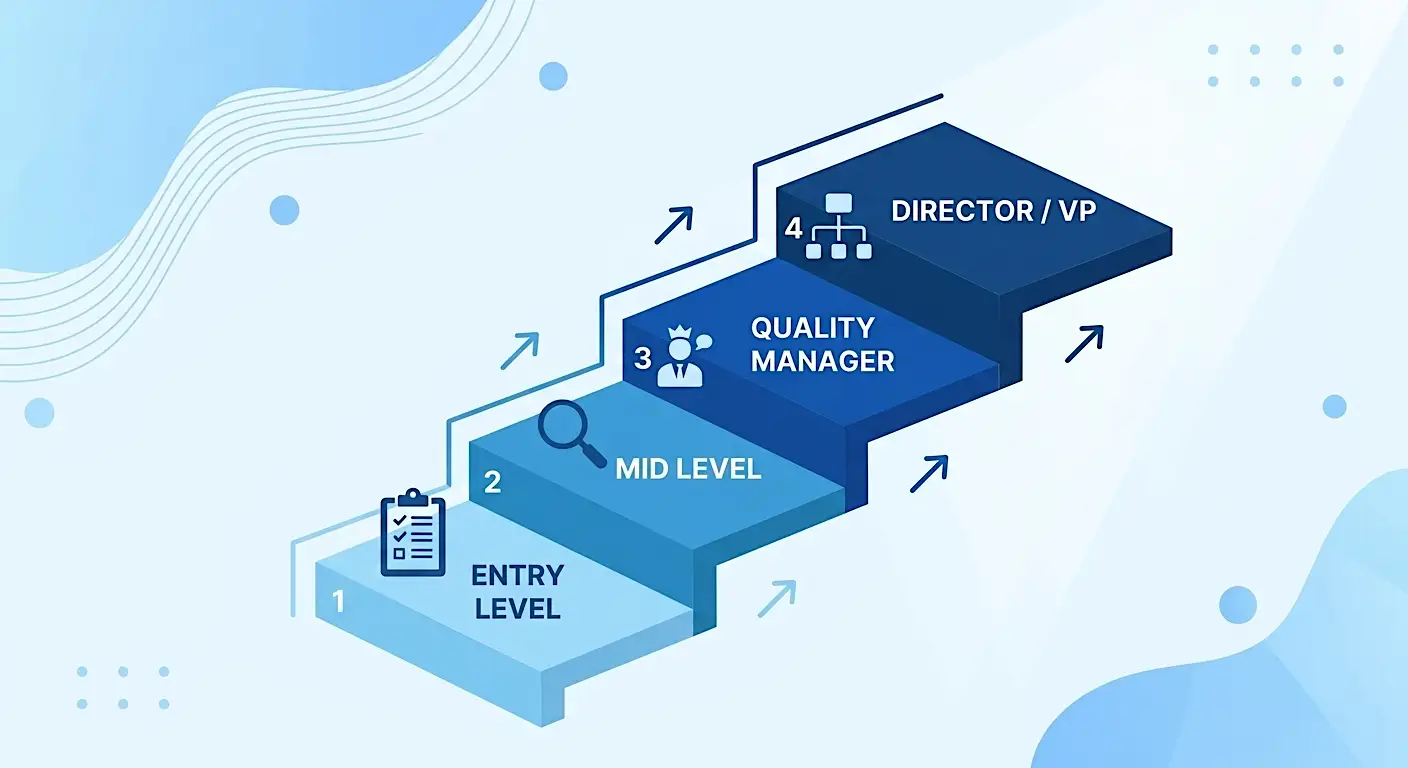
Most quality managers do not start in the role directly. The typical progression looks something like this:
Entry Level (0–3 years): Quality inspector, quality coordinator, quality technician, document controller, or process technician. At this stage, you are learning the basics of quality control, inspection, and documentation.
Mid Level (3–7 years): Quality engineer, quality assurance specialist, internal auditor, or quality analyst. This is where you develop deeper skills in auditing, root cause analysis, process improvement, and QMS management. Earning your ISO 9001 auditor or lead auditor certification during this phase significantly accelerates your progression.
Quality Manager (5–10+ years): At this level, you own the QMS, lead audits, manage quality teams, and report directly to senior management. You are responsible for the strategic direction of quality within the organization.
Senior Level (10+ years): Director of quality, VP of quality, or head of quality and compliance. At this stage, you oversee quality across multiple sites, business units, or product lines and play a role in overall business strategy.
The timeline varies. Professionals who actively pursue training and certification often reach quality manager positions faster than those who rely solely on experience.
What Quality Managers Earn
Compensation for quality managers varies based on industry, location, company size, and experience level.
In the United States, quality manager salaries typically range from USD 65,000 to USD 110,000 per year, with a median around USD 85,000. Professionals in aerospace, medical devices, and pharmaceutical manufacturing tend to earn at the higher end of the range. Those in smaller companies or less regulated industries may start closer to the lower end.
Quality managers who hold recognized certifications (ISO lead auditor, ASQ CQM, or Exemplar Global credentials) consistently earn more than their non-certified peers. Investing in professional training is one of the most direct ways to increase your earning potential.
How to Get Started Today
If you are serious about pursuing a quality management career, here are the most practical steps you can take right now:
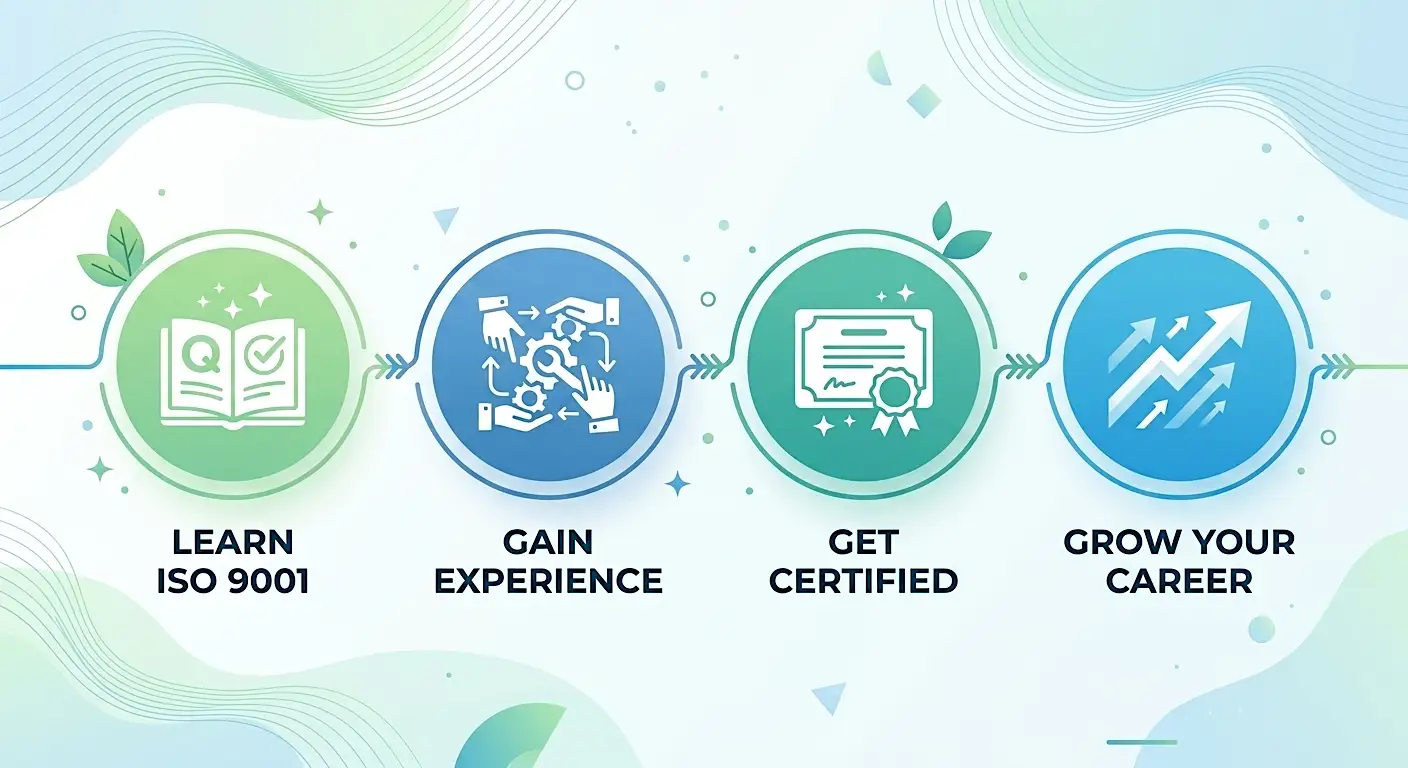
1. Learn ISO 9001 fundamentals. Start with the ISO 9001 Foundation Training to build a solid understanding of the standard and its principles.
2. Gain practical experience. Look for roles that involve quality inspection, document control, or process improvement. Volunteer for internal audit teams at your current company.
3. Earn an auditor certification. The ISO 9001 auditor or lead auditor certification is the most recognized credential in the profession and opens doors to quality management positions across industries.
4. Develop your leadership skills. Quality management is as much about people as it is about processes. Seek opportunities to lead projects, train colleagues, and present to management.
5. Stay current. Quality management evolves constantly. With the upcoming ISO 9001 revision, staying up to date on changes to the standard is essential for career growth.